Life is Good® is a lifestyle brand built on the power of optimism. Rooted in the belief that life is not perfect, but life is good, the brand inspires people to focus on the good through uplifting messages, playful graphics, and comfortable apparel.

Objective
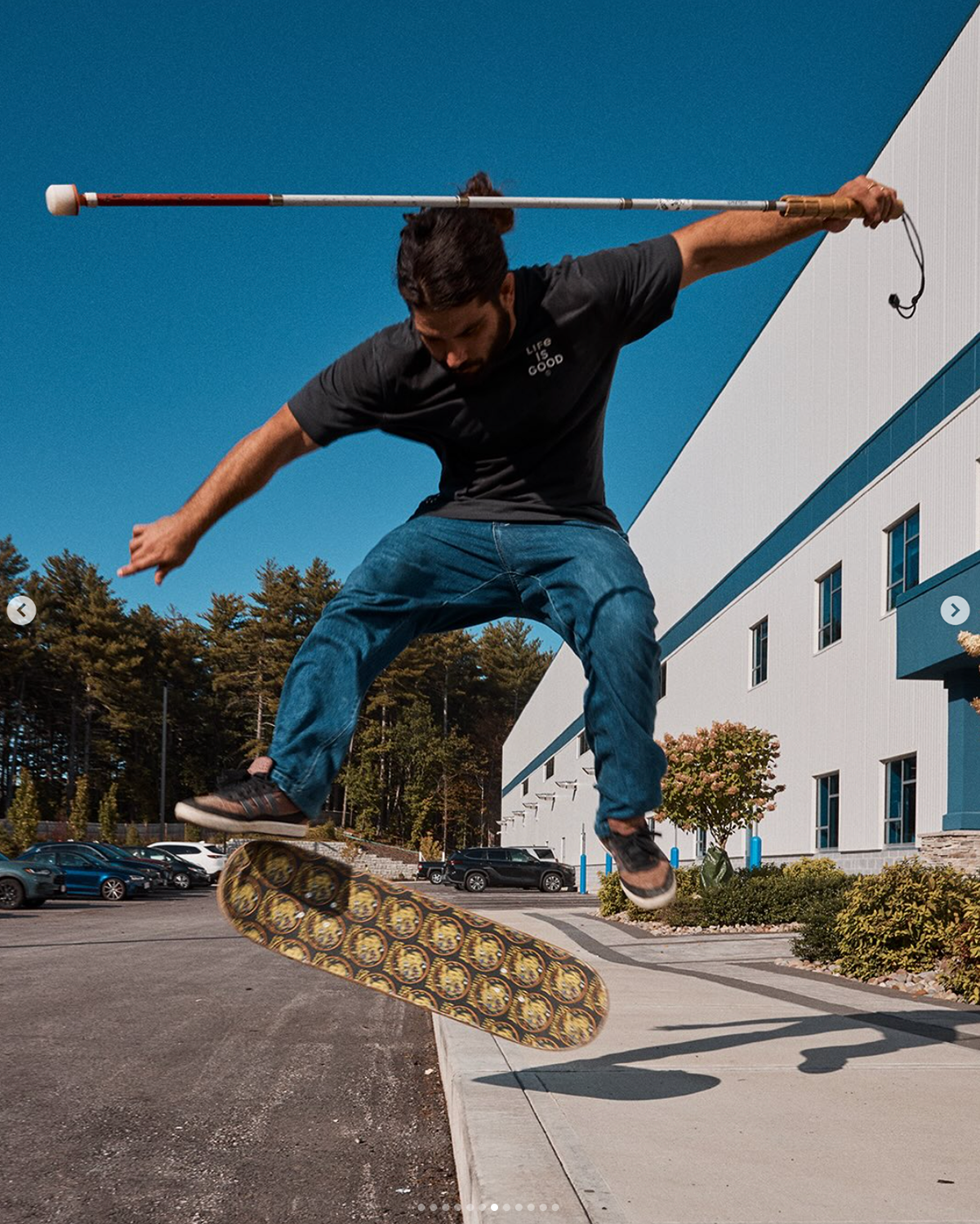
Working with the Life is Good Marketing team and blind content creator Anthony Ferraro, I helped lead the development of the brand's first scalable Braille apparel experience. The project brought together inclusive design, embroidery innovation, and hands-on testing to create a product that could be experienced through touch.
Prototyping and Testing
Research & Collaboration: I led the exploration of how tactile interaction could become part of the customer experience, leading cross-functional collaboration between marketing and production to evaluate placement, usability, and visual balance. Through iterative prototyping and real-world testing, we established a solution that respected both accessibility and brand aesthetics.
ADA Guidance & User Testing: To ensure long-term consistency beyond a single product, I established creative and production standards for tactile embroidery, translating ADA guidance and user testing into practical design principles the marketing and production teams could share. These standards created a repeatable framework for future accessible products rather than a one-time solution.
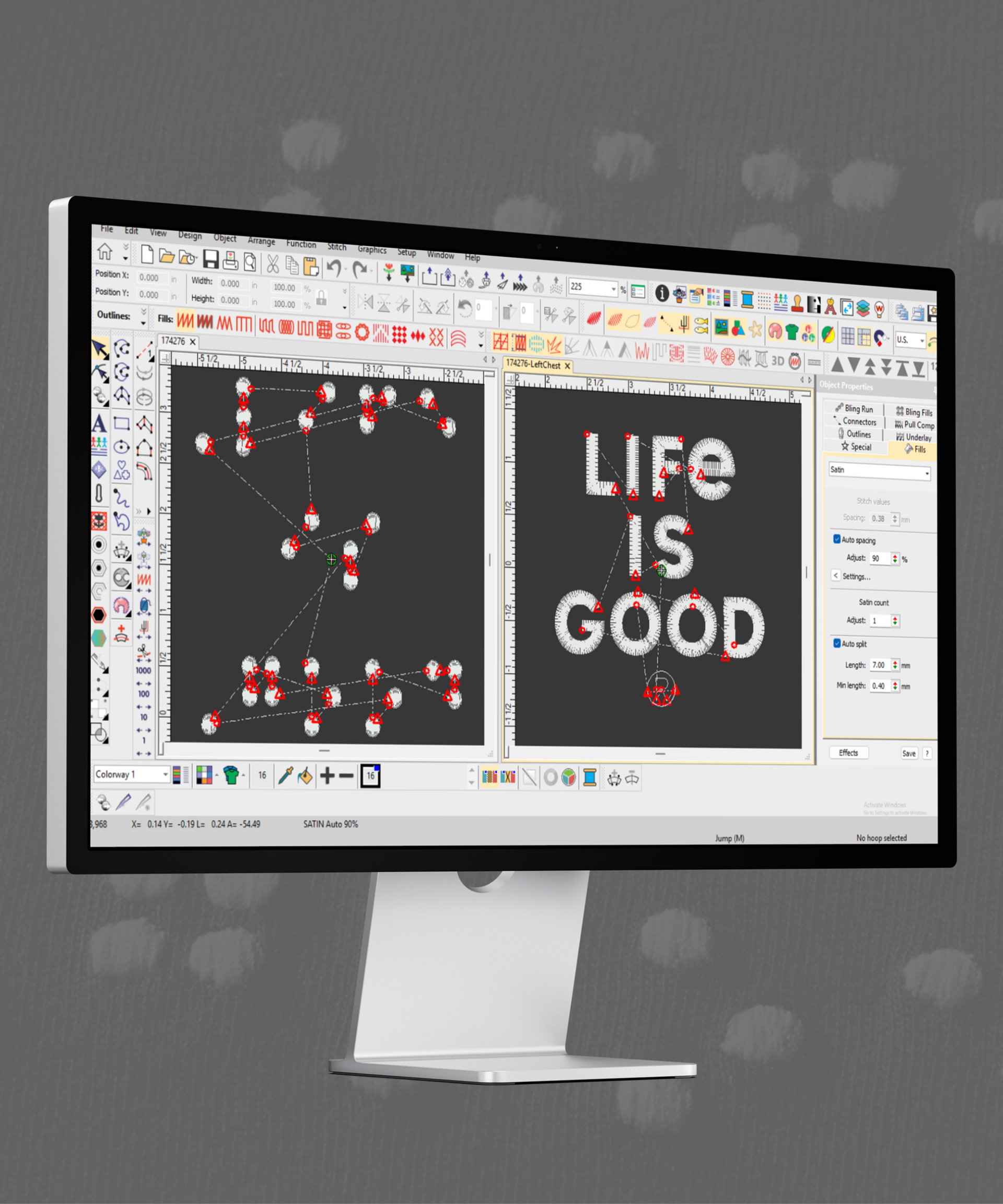
Digitization
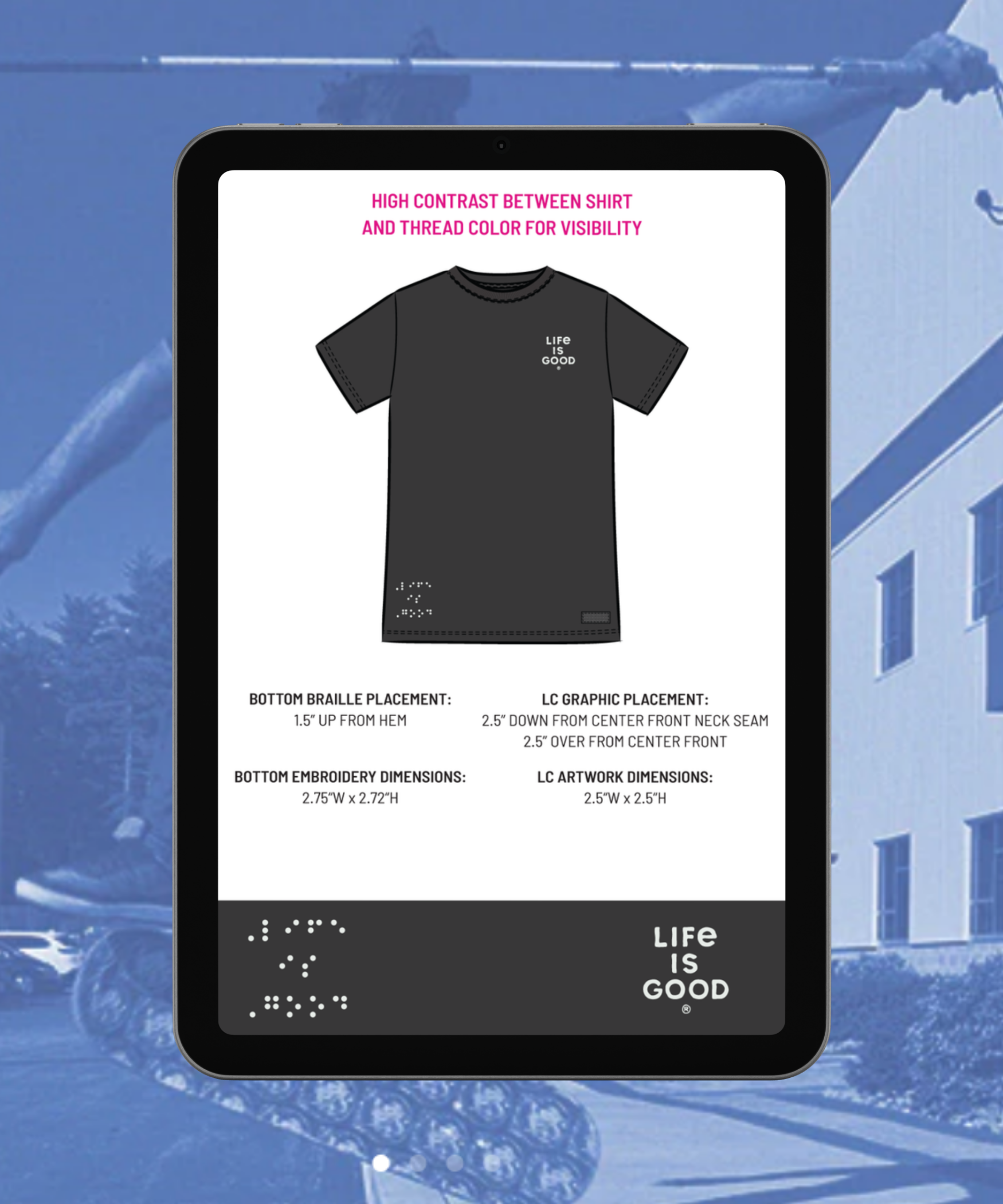
Scale, Spacing, and Tactile Legibility: Every iteration balanced three competing priorities: accessibility, brand expression, and manufacturability. Rather than treating accessibility as a constraint, the design process demonstrated how thoughtful creative direction could strengthen both the customer experience and the integrity of the brand.
Embroidery Structure and Durability: I tested stitch density, height, and direction to create Braille dots that were raised enough to be readable, comfortable against the body, and durable through wear and washing. Structural stitch decisions were critical to maintaining dimensionality over time.
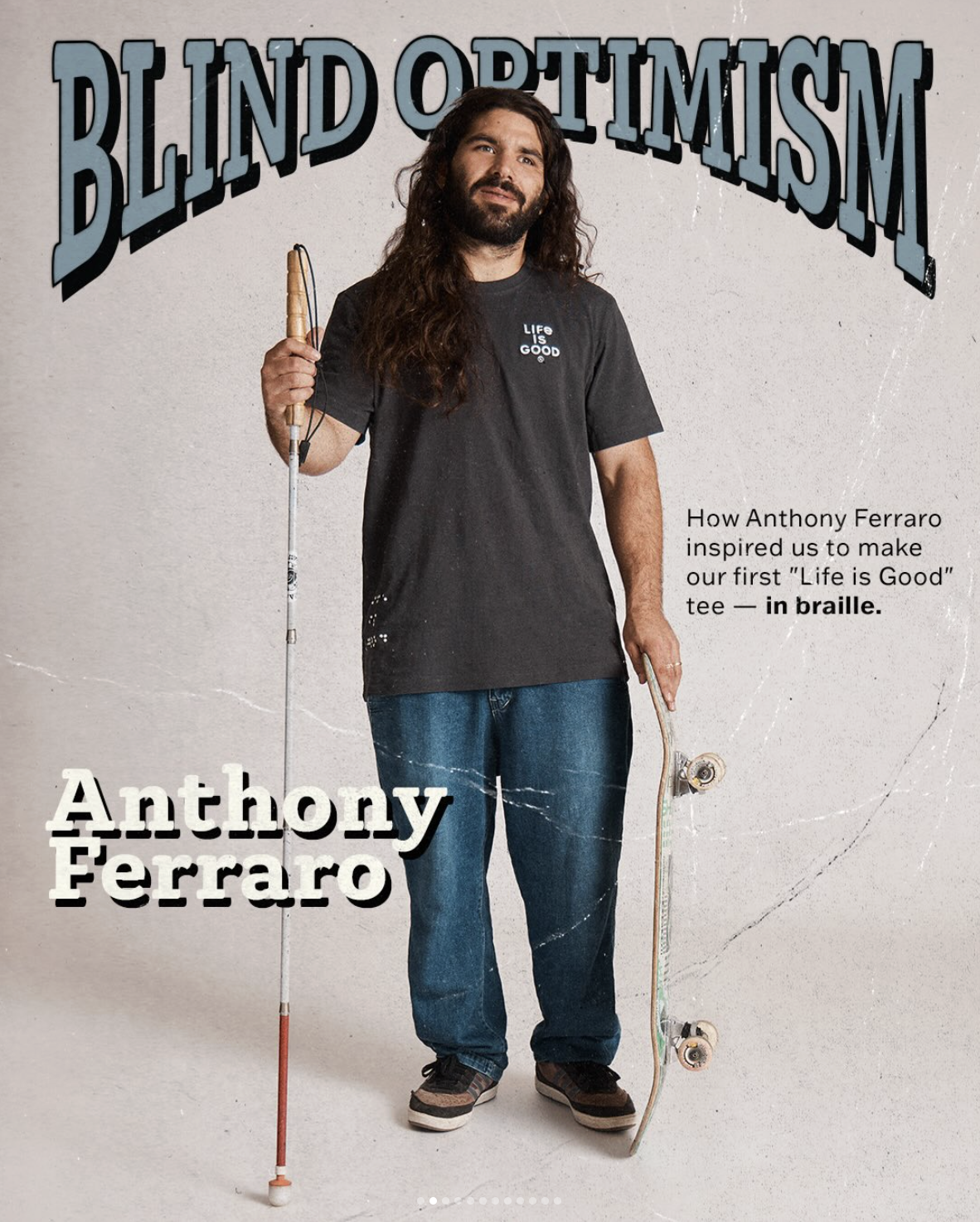
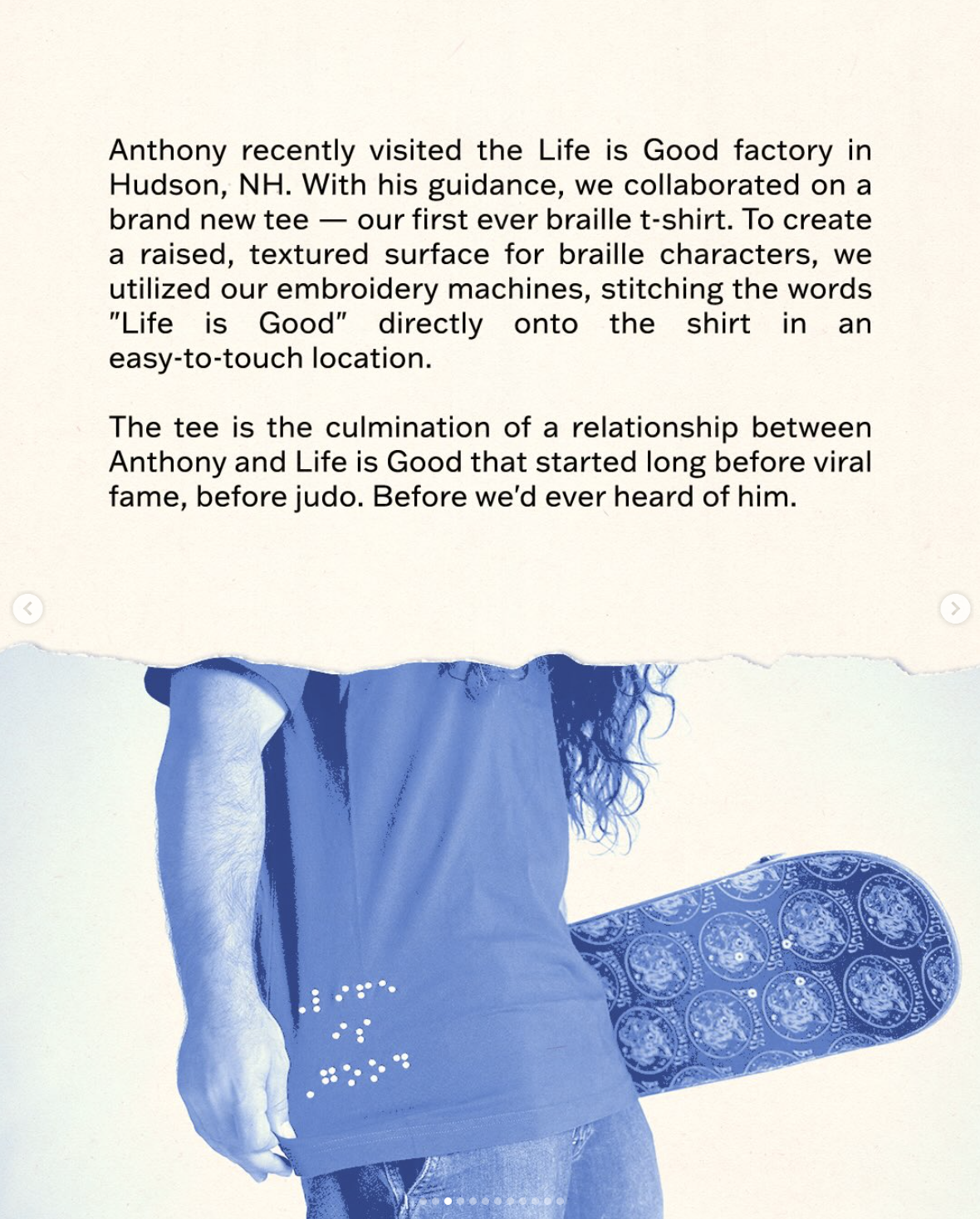
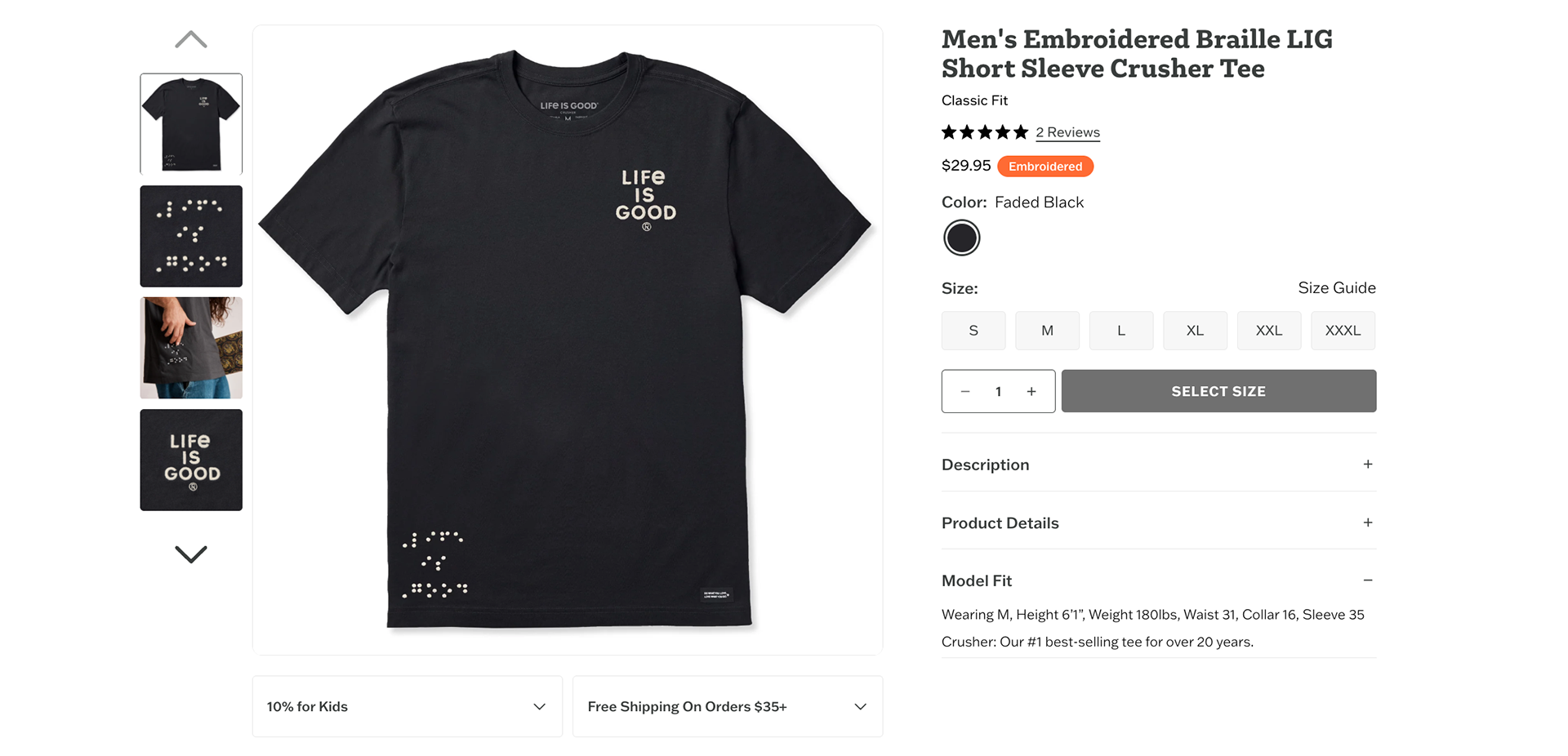
Product Launch
World Braille Day: Launching on World Braille Day reinforced the strategic intent behind the work, positioning accessibility as part of the brand story rather than a feature. Beyond a successful product launch, the project introduced an internal framework for accessible embroidery that can inform future product development across teams.
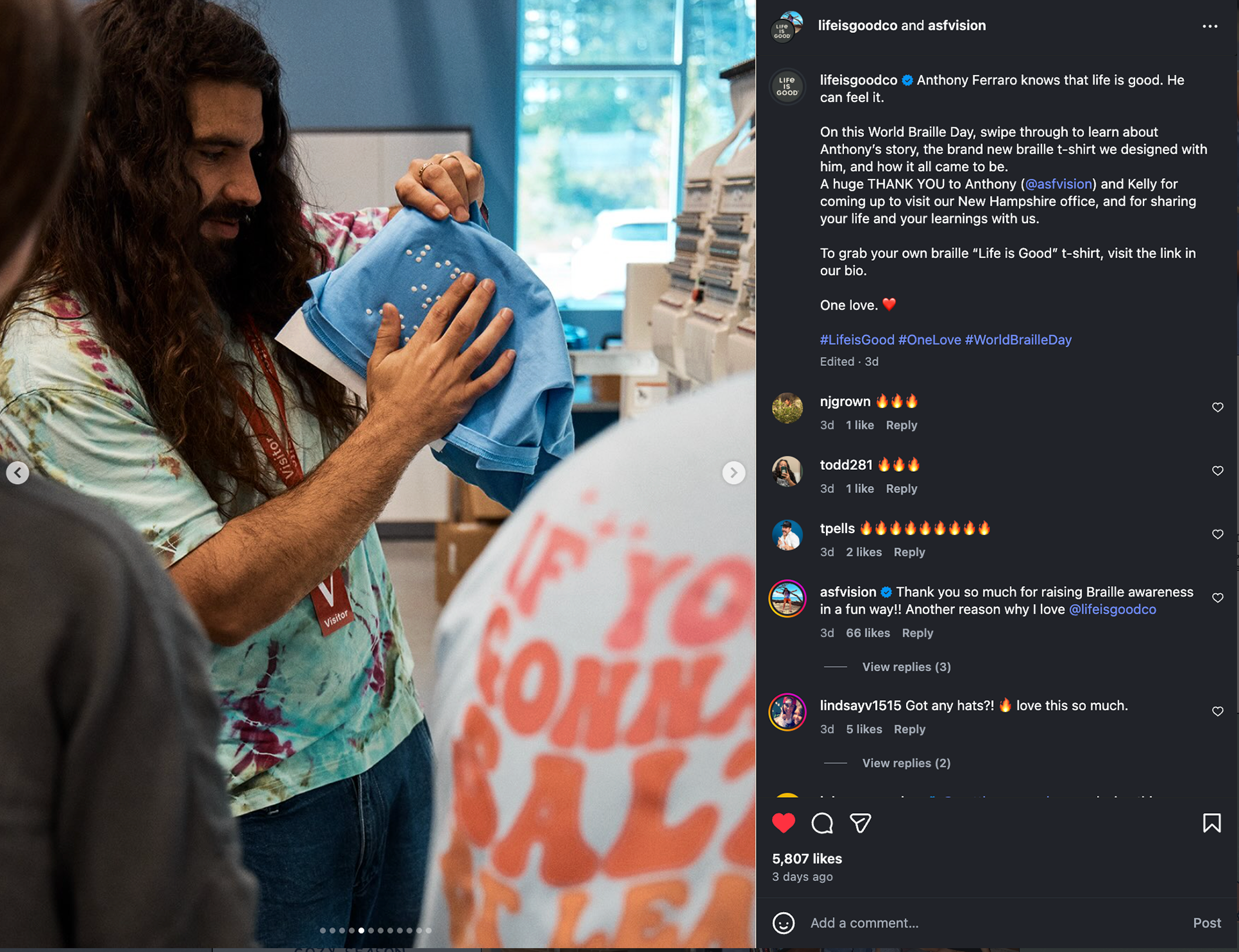
Accessible Design in Real Time: As part of the launch experience, I guided Anthony Ferraro and his family through the creative and production process, creating an opportunity for the people the project was designed for to directly shape how we evaluated its success. Watching the work through their perspective reinforced a belief that meaningful creative leadership begins with empathy and ends with experiences people genuinely connect with.
Impact
The project sparked thoughtful engagement and meaningful conversations around tactile accessibility, helping bring visibility to how design choices directly shape someone’s ability to connect with a product. It reinforced that inclusive design is not a limitation, but an opportunity to create work that is both functional and emotionally resonant. The Braille-embroidered t-shirt was met with strong sales and positive customer feedback, further demonstrating the real-world impact of inclusive design.
Reflection
Projects like this remind me what creative leadership is really about. Creating experiences people genuinely connect with. Listening first. Designing with empathy. Building something that belongs to everyone.
Watching my legally blind father read the Braille on the finished shirt and smile was a quiet reminder that the most meaningful work often isn't the loudest. Sometimes it's simply creating something that allows one more person to experience a brand in a way that truly belongs to them.
Interested in collaborating on a project?
Send me an email at: sjmoecker@gmail.com. I'd love to hear your idea!