Campaign: Blind Optimism
Brand: Life is Good
Creative Director: Kelly Larson
Creative Lead: SJ Moecker
Date: 2025
Brand: Life is Good
Creative Director: Kelly Larson
Creative Lead: SJ Moecker
Date: 2025
Scope: Creative Direction • Inclusive Design • Art Direction • Embroidery Innovation • Digitizing • Technical Development • Production Collaboration
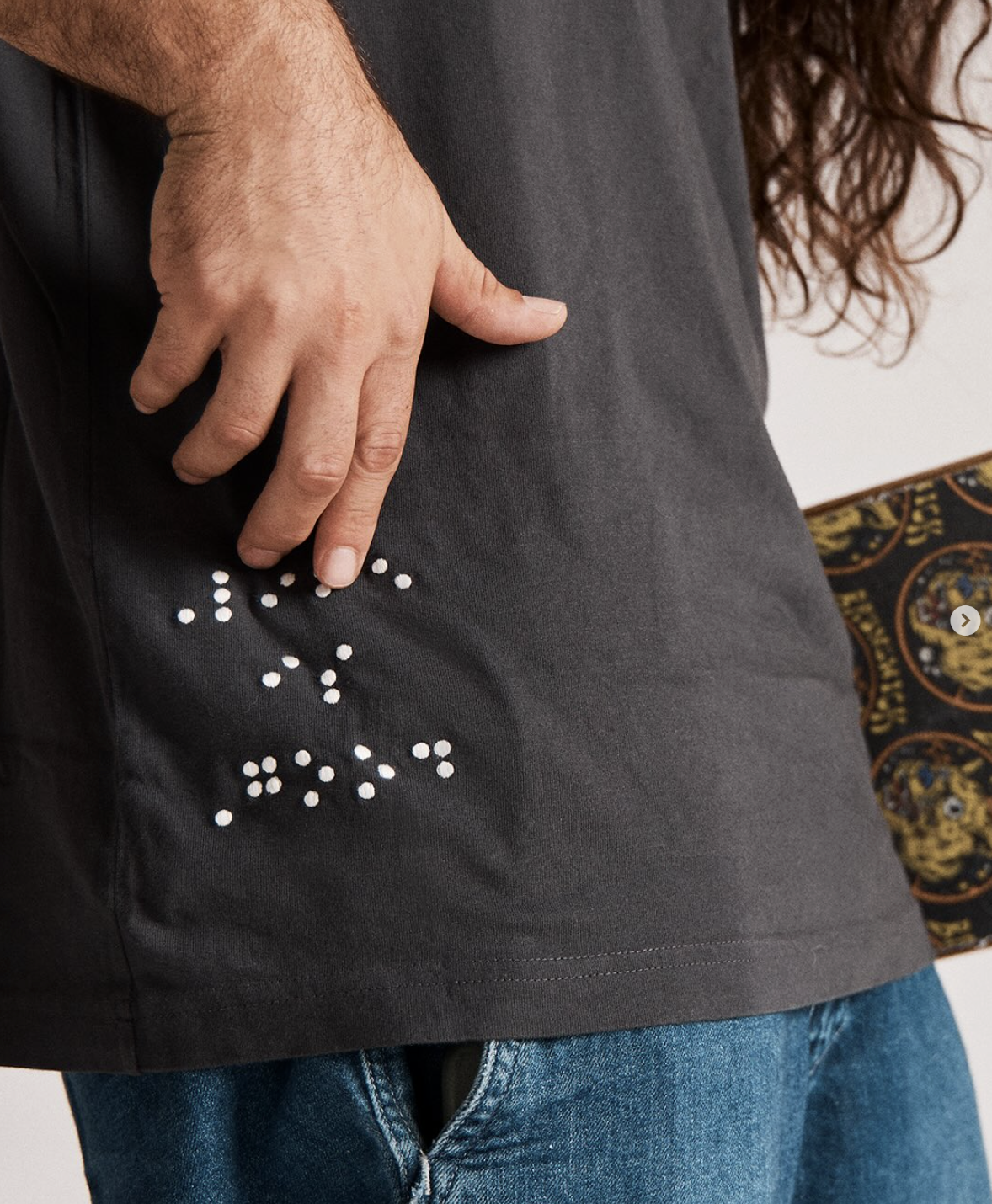
Description: In collaboration with the Life is Good Marketing team and Anthony Ferraro, I helped lead an inclusive apparel initiative that united accessibility, creative strategy, and embroidery innovation to create Life is Good's first scalable Braille apparel experience.
Designing Through Experience.
I lead the exploration of how tactile interaction could become part of the customer experience, leading cross-functional collaboration between marketing and production to evaluate placement, usability, and visual balance. Through iterative prototyping and real-world testing, we established a solution that respected both accessibility and brand aesthetics.
To ensure long-term consistency beyond a single product, I established creative and production standards for tactile embroidery, translating ADA guidance and user testing into practical design principles the marketing and production teams could share. These standards created a repeatable framework for future accessible products rather than a one-time solution.
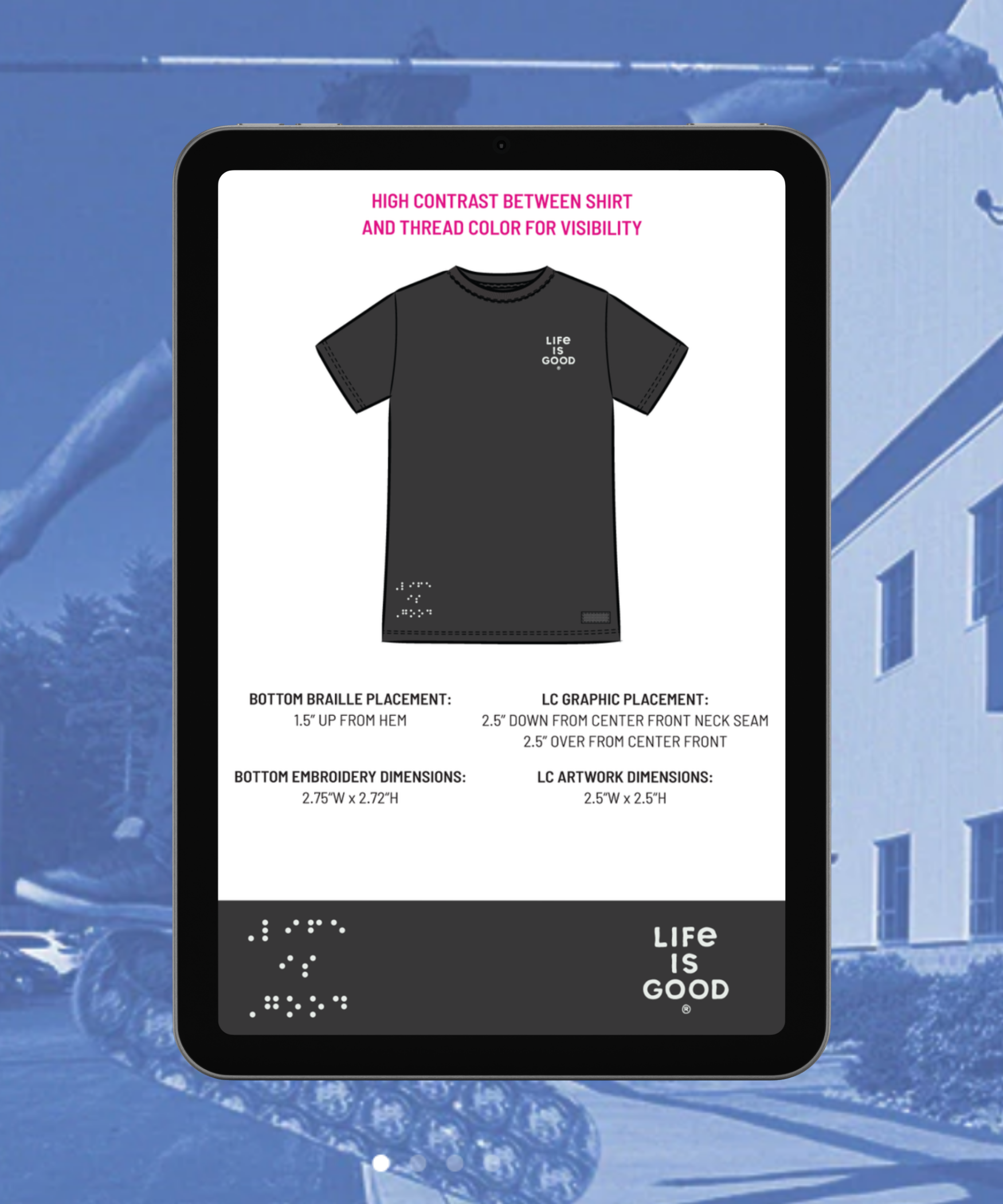
Accessibility Standards.
Scale, Spacing, and Tactile Legibility.
Every iteration balanced three competing priorities: accessibility, brand expression, and manufacturability. Rather than treating accessibility as a constraint, the design process demonstrated how thoughtful creative direction could strengthen both the customer experience and the integrity of the brand.
Every iteration balanced three competing priorities: accessibility, brand expression, and manufacturability. Rather than treating accessibility as a constraint, the design process demonstrated how thoughtful creative direction could strengthen both the customer experience and the integrity of the brand.
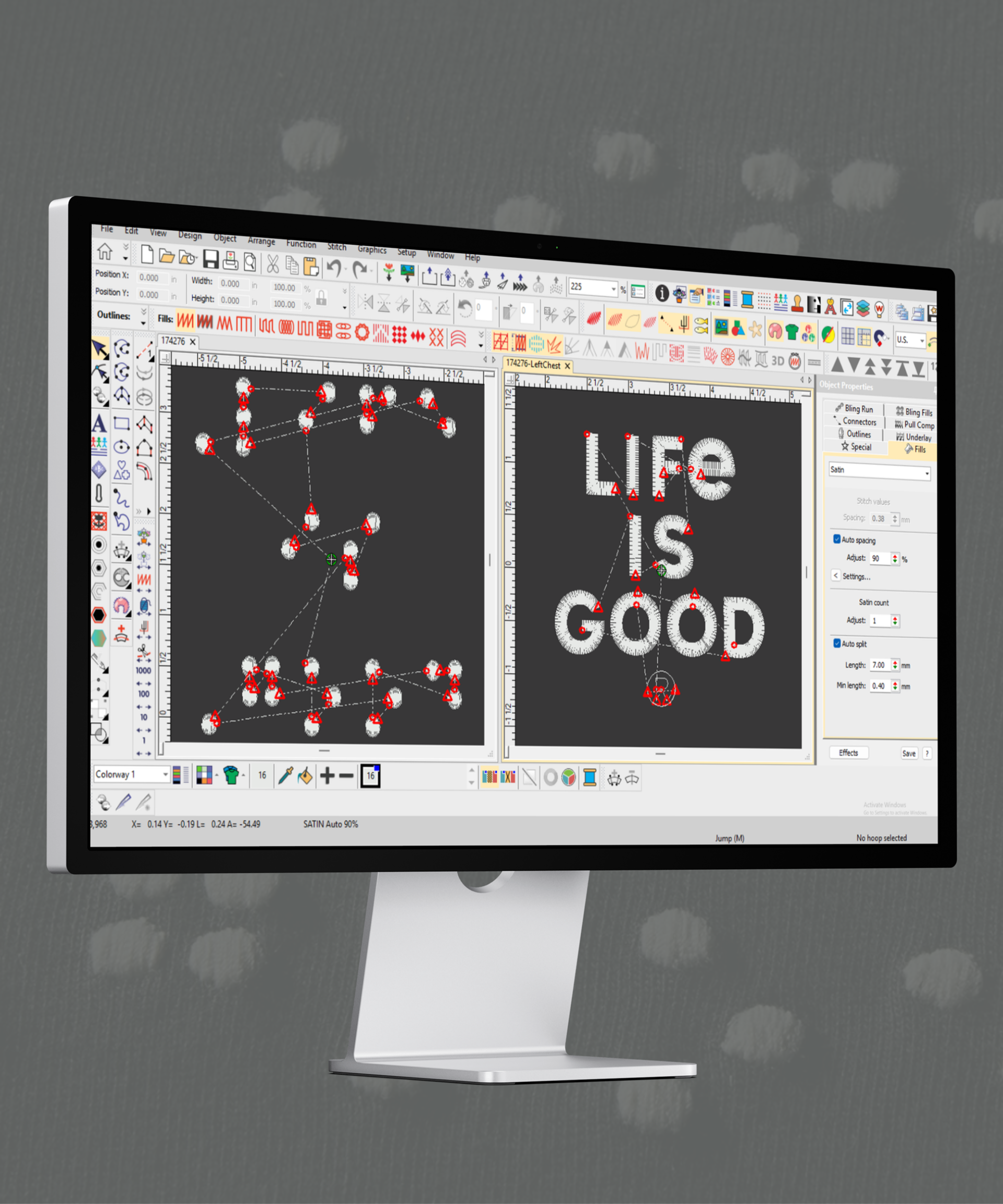
Embroidery Structure and Durability.
I tested stitch density, height, and direction to create Braille dots that were raised enough to be readable, comfortable against the body, and durable through wear and washing. Structural stitch decisions were critical to maintaining dimensionality over time.
I tested stitch density, height, and direction to create Braille dots that were raised enough to be readable, comfortable against the body, and durable through wear and washing. Structural stitch decisions were critical to maintaining dimensionality over time.
Impact.
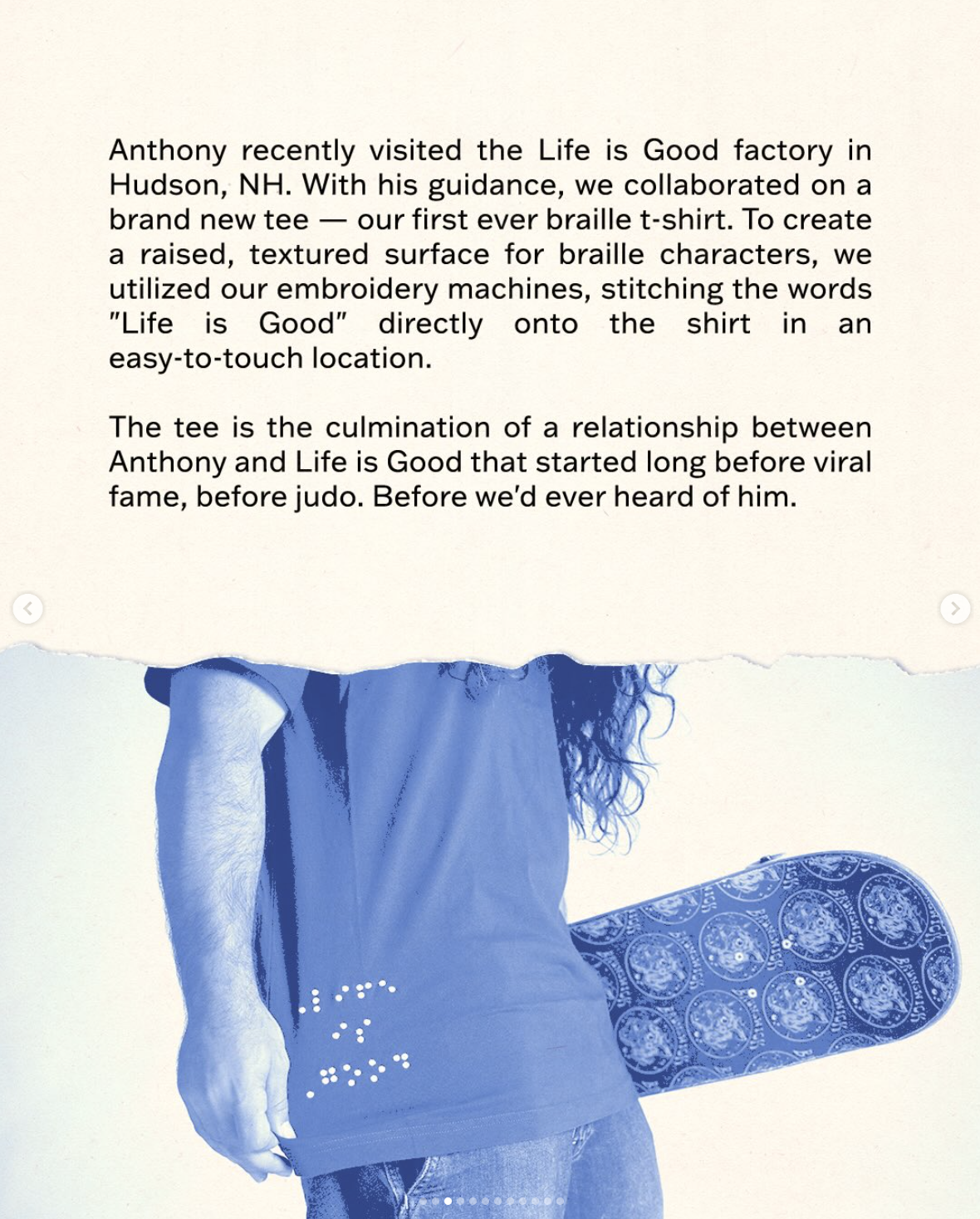
Launching on World Braille Day reinforced the strategic intent behind the work, positioning accessibility as part of the brand story rather than a feature. Beyond a successful product launch, the project introduced an internal framework for accessible embroidery that can inform future product development across teams.
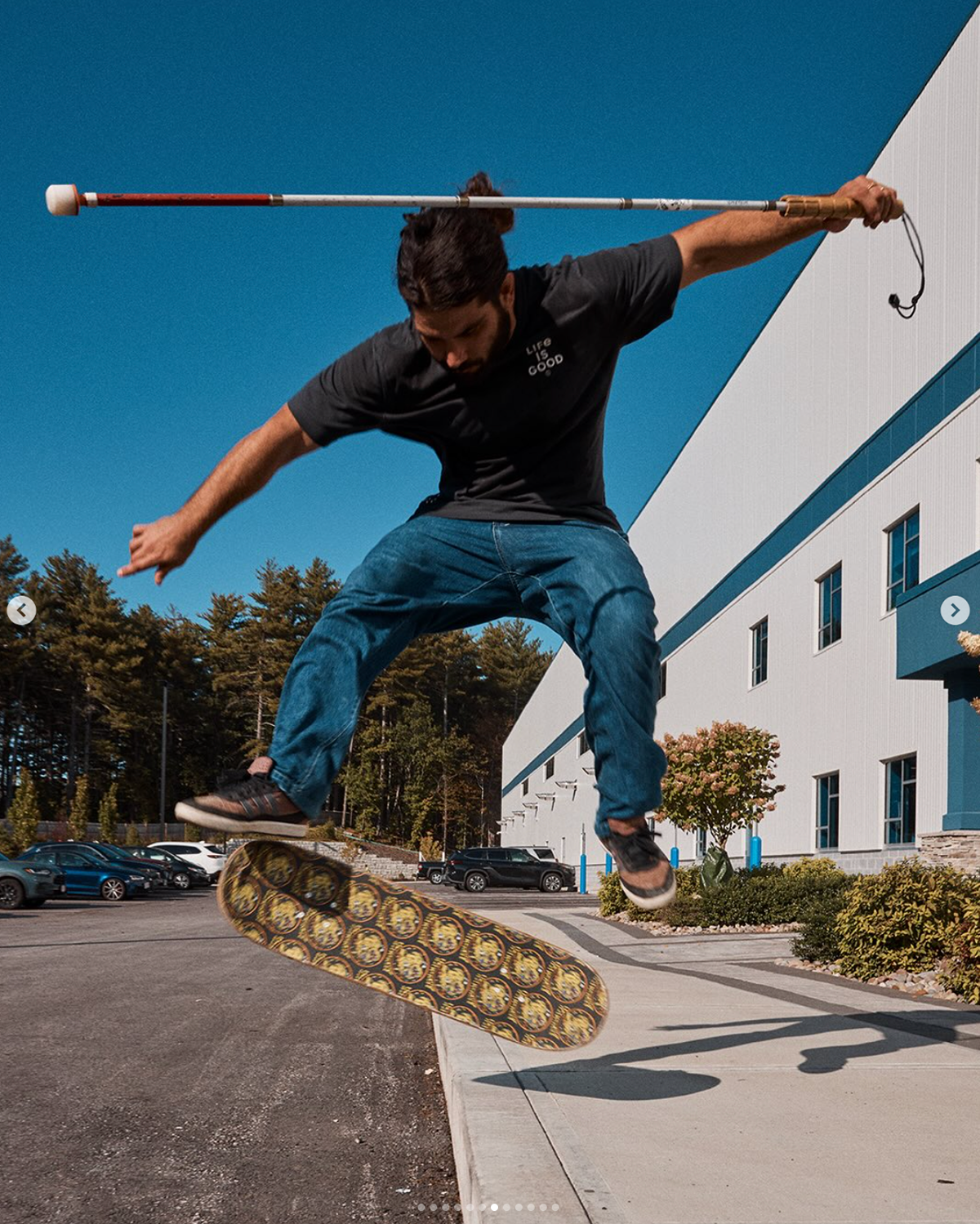
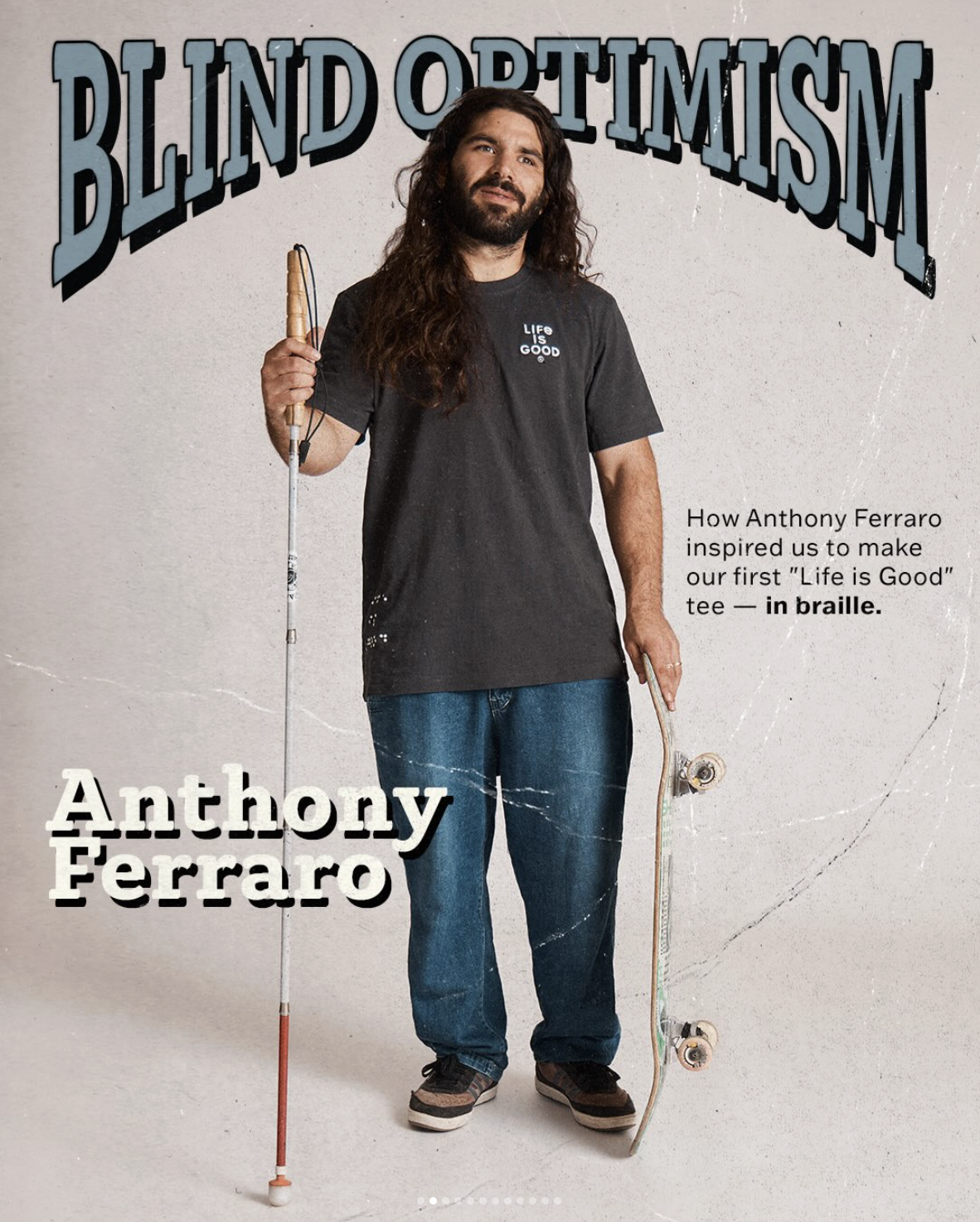
Accessible Design in Real Time: As part of the launch experience, I guided Anthony Ferraro and his family through the creative and production process, creating an opportunity for the people the project was designed for to directly shape how we evaluated its success. Watching the work through their perspective reinforced a belief that meaningful creative leadership begins with empathy and ends with experiences people genuinely connect with.
The project sparked thoughtful engagement and meaningful conversations around tactile accessibility, helping bring visibility to how design choices directly shape someone’s ability to connect with a product. It reinforced that inclusive design is not a limitation, but an opportunity to create work that is both functional and emotionally resonant. The Braille-embroidered t-shirt was met with strong sales and positive customer feedback, further demonstrating the real-world impact of inclusive design.
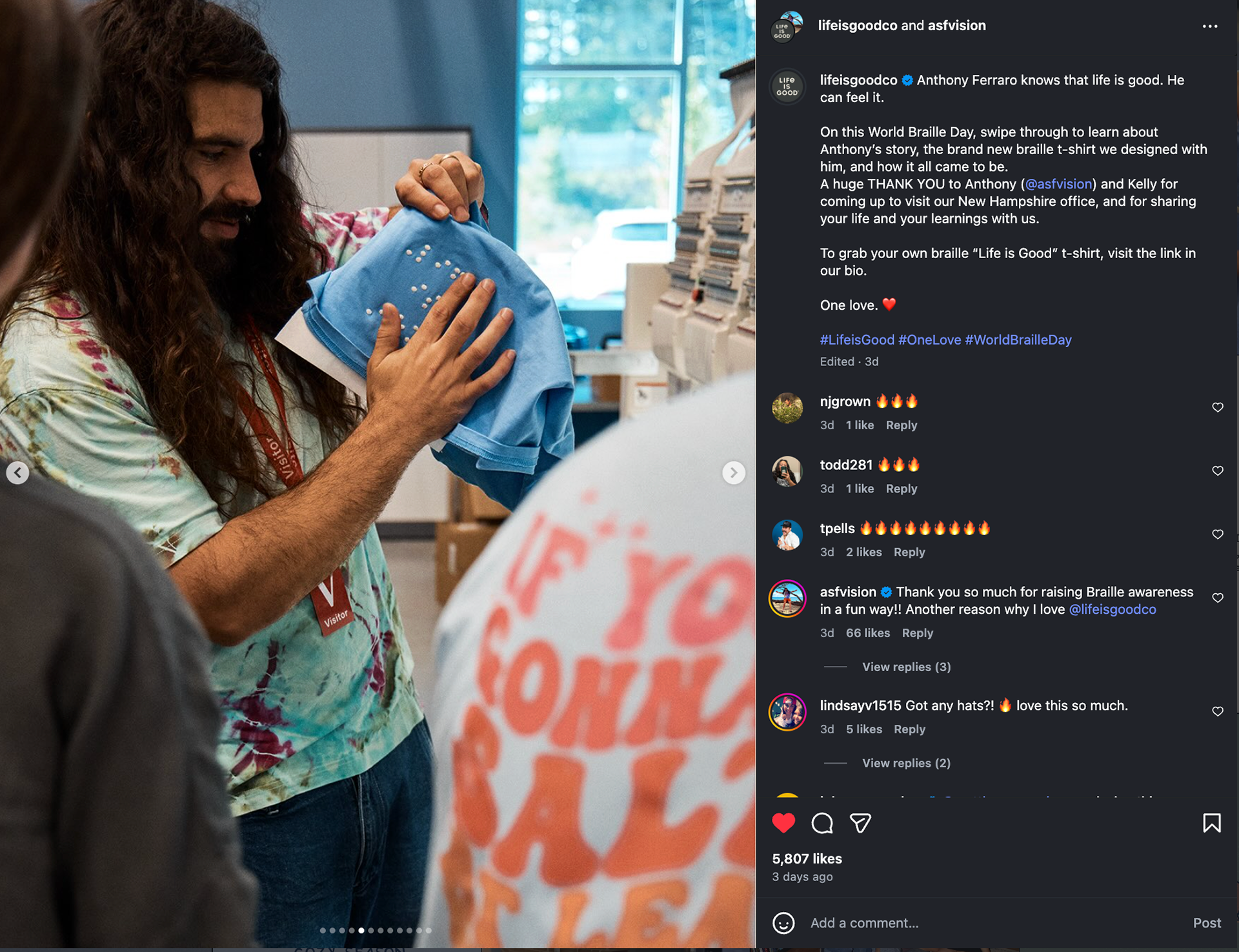
Reflection: Projects like this remind me what creative leadership is really about. Creating experiences people genuinely connect with. Listening first. Designing with empathy. Building something that belongs to everyone.
Watching my father read the Braille on the finished shirt and smile was a quiet reminder that the most meaningful work often isn't the loudest. Sometimes it's simply creating something that allows one more person to experience a brand in a way that truly belongs to them.
Interested in collaborating on a project?
Email me: sjmoecker@gmail.com
Email me: sjmoecker@gmail.com
I'd love to hear your idea!